

[#8] How Much Am I Entitled to If I Am Bumped from a Flight or My Flight Is Late?

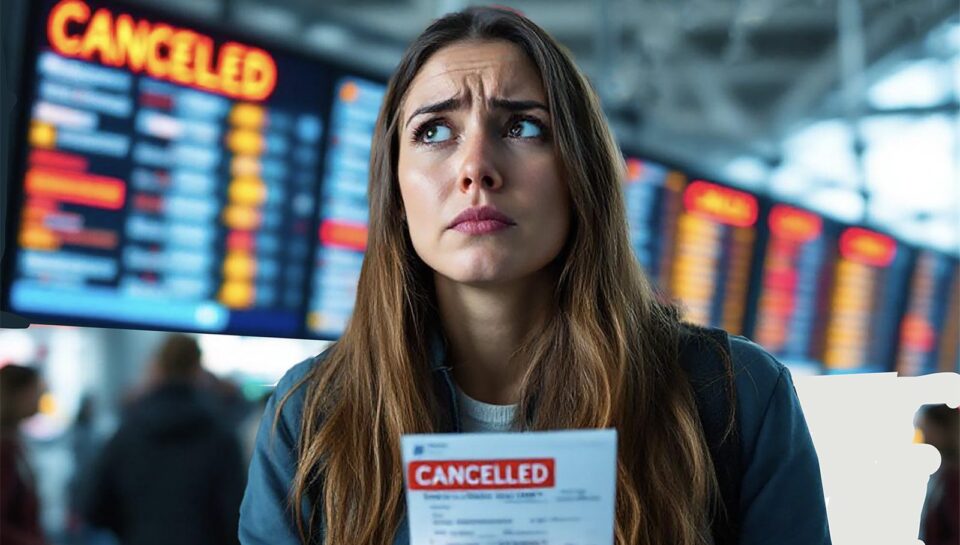
By the time you get through the traffic jam and find a parking space, it is no wonder you’re not warm and fuzzy when meeting the ticket agent. She adds to your joy by smiling and saying that you are being bumped from the airplane because the plane is full or your flight is delayed two hours because of bad weather in another city. When you think the day can’t get any worse, she adds, “Sorry, but we can’t compensate you for the inconvenience.” International flights have different rules.
This is when you say I’m taking Ted Gordon’s review of my rights to the airport each time I travel. It is in two parts. This month, I will discuss what happens when your plane is late or you get bumped. Next month’s newsletter covers the more complex issue of what happens if your luggage is lost, delayed, or damaged.
To summarize, a mere delay in flights under “normal” circumstances does not require compensation unless specified by the airline’s internal rules. Conversely, if you are involuntarily bumped from a flight because of overbooking, you may be entitled to compensation when delayed over one hour.
If you read my earlier edition (or anyone else’s article), be sure it is current. I redrafted this commentary since President Trump rescinded the Biden Administration’s proposed rules that would have increased the compensation and allowed passengers the right to monetary compensation. As it now stands, there are no laws that require cash reimbursement for delayed domestic flights, unless (a) there is a significant delay (as defined by each airline) and (b) as a result, you elect not to fly. If you take a later flight, the airline must follow its own policy, which generally does not require cash compensation, but only airline miles or discounts on future flights.
BUMPING
Bumping, or what the statute calls “denied boarding,” is probably the most offensive and dreaded word you can hear at the airport. You get to the airport early, check-in, have a confirmed reservation, and arrive at your gate on time, expecting easy boarding and flight. Unfortunately, there is no restriction on the Airline overbooking the plane, figuring a certain number of people won’t show up. If everyone with a ticket wants to board, there are more people than available seats. Some people can’t fly, despite their reservation, and that is called bumping.
No Compensation
Before explaining your rights, it’s easier to explain the three situations when no compensation is required under the rules issued by the Federal Aviation Administration (“FAA”).
Changing Planes. If the airlines needed to change planes (usually due to switching to a smaller plane with fewer seats or fewer seats in first class and business class), you are not entitled to compensation. Technically, the substitute must be for operational or safety reasons, but from the Airline’s point of view, there are probably a few other reasons to change planes.
Smaller Planes and Charter Flights. Airlines can change planes for weight balance for planes with 60 or fewer seats, which is the main reason for changing planes. Any plane change is exempt for planes of 29 or fewer passengers. Also excluded are charter flights, which are not part of the Airline’s regular schedule. In all three situations, no compensation is required.
Downgrading. If you are downgraded from a higher-class seat to a lower-class seat (such as first class to business class), you are only entitled to compensation for the price difference of the seat. You will not be compensated for the aggravation, inconvenience, and reduced comfort during your travel. You cannot fight it, although I know of cases where people have made enough noise that the agent has offered additional compensation. It’s at the attendance discretion, and they are not required to do so and are usually encouraged not to unless the customer over-complains.
When You Must Be Compensated
First, Ask for Volunteers. The Airlines must first ask for volunteers willing to give up their flight for a seat on a later plane. Usually, the Airline makes its first offer of a credit towards future flight vouchers plus seating on a later aircraft, looking for volunteers. If not enough people agree, then the Airline will increase its offer. The Airline will keep sweetening its offer until it reaches its secret internal rewards limit.
If you are considering volunteering, I would like to know if the airplane will be the same size or if it is a smaller model and, therefore, more likely to have bumped passengers. If you are giving up a confirmed seat on this plane, you want a confirmed seat on the next plane, not a standby or low-priority boarding. Ask how much compensation you are getting, and will it be cash or just an airline voucher? If all they are offering is a voucher, ask how long the voucher will be good, whether it works during holidays and other peak times, and whether there are any restrictions on changing vouchers. Further, ask if you can have food compensation for a meal while waiting. Finally, I would like to see if you can access their “executive lounge” to relax instead of sitting in the airport.
Before discussing the minimum amounts required by the FAA, know there is no specified maximum set by law. If you accept vouchers or any other “provision” offered by the Airline as part of the “deal,” you are giving up your rights to any other compensation or right to complain. Since President Trump eliminated the proposed increased amounts and cash offers mandated by the Biden Administration, there is no law requiring airlines to compensate you for mere relay under one hour. Over an hour, airlines must offer compensation unless the delay is due to “normal” circumstances (as defined by each airline). Airlines are very receptive to negotiations, and if you don’t ask and “play the game,” you might obtain the full amount available.
Then Involuntarily Bump Per Its Rules. If insufficient passengers voluntarily give up their seats, the Airline will begin involuntarily selecting passengers for bumping (“denied boarding”). Here is where it pays to do everything “by the book” when checking in because each Airline sets its own rules. Some base criteria on passenger check-in times and others decide who paid the lowest amount for the seat (“fare”). Many firms protect frequent flyers above all others. It is not much help, as the Department of Transportation requires that you be given an explanation of your rights and how the carrier decided who got bumped.
Amount of Compensation:
First, you have a confirmed reservation where you checked in on time, and you arrived at the departure gate in a timely manner. Then, if the Airline cannot arrange for you to arrive at your domestic destination within one hour later, they must compensate you based on the following schedule (as of January 2025). Ah, but there is always an exception. No payment is required if the delay is not their normal fault, as defined by each airline, and usually including the weather.
Compensation Provided
Up to 1-hour delay: No compensation.
1- to 2-hour delay: The lesser of 200% of the one-way fare or $775.
Over 2-hour delay: Lesser of 400% of the one-way fare or $1,550.
International flights have different dollar amounts.
FLIGHT DELAYS
Regardless of the law, if you’re going somewhere that matters, I suggest you check the weather in both your departure and your arrival city before your flight. If the weather is questionable, you should have written out backup plans for an alternative. Your other plans could be through another Airline that flies through a different hub or a completely different transportation system. I have had relatives facing a problem with the weather at their departure city, and I advised them to take a taxi or train to a different city and leave from that airport, which had no problems. Be proactive, and it can save you a significant headache.
However, back to the question at hand, when was the Airline that you if they tell you your flight is delayed, how much should you receive? Individuals with a disability have separate, more powerful rights, and for information, Google “14 C.F.R. 260.6(b).” International flights (not covered by this newsletter) also have separate amounts. Further, if you travel within the European Union, Rule 261 is comprehensive and involves hotel and meal compensation. I have read that some major airlines have voluntarily considered adopting European Rule 261. However, some attorneys speculate that they might drop their voluntary adherence to those rules if Trump signals, he finds them offensive. So, check with your carrier.
If you settle with the airlines and you have waived your rights. Usually, a settlement means the company is booking you on another flight at a later time, sometimes with compensation, sometimes not. The same advice for bumping that was discussed above applies here, too. Ensure you are given a confirmed seat on a plane and that it is a large enough plane that you’re unlikely to risk bumping. Assuming you do not sub with Airline, comma, and like not to continue with your wife, then you are entitled to automatic compensation.
With the federal government, you have to take whatever you can get, even if it is not as lucrative as you believe you deserve.
Suppose you were waiting in line to try to book another flight because the Airline canceled your current plane reservation. I suggest you simultaneously message the Airline via Twitter (now “X”) or other social media. When a friend of mine told me this method was highly affected by her Airline, I didn’t give it much credence. However, when I read a similar article in a major newspaper, I began to believe it was effective. The third thing I recommend while standing in line and sending a message via Twitter (“X”) is to call the Airline’s customer service. It may seem odd to approach a problem with three different methods. However, professional travelers tell you that the multiple approach is the most efficient and effective to book your next flight.
Next month’s newsletter discusses what to do when your luggage is lost, delayed, or damaged. I encourage you to take both articles with you every time you fly so you know exactly what your rights are.
– – – – – – – – – – – – – –
Ted is a retired attorney, so he is writing only as a layperson. This article provides general information only and is not for a particular situation; it should not be construed as advice. It is provided without express or implied warranties of any kind, including but not limited to implied warranties of merchantability or fitness for a particular purpose. If you have a specific problem, seek advice from a CPA, an attorney, a doctor, or other professional. Sorry, my attorneys made me say all that!
© Ted Gordon 2025
Feel free to pass this email on to friends.
Sign up for free monthly emails
<No advertising. No Sales. Just Newsletters>
www.tedgordon.com